Share this Post

For centuries, many communities around the world have used seaweed as a fertilizer. Either as liquid seaweed fertilizer or as a mulch.
Rich in nutients, seaweed revitalises soil and is vital in the success of many harvests as it increases crop yields.
A free and plentiful resource it has been used mostly in coastal areas due to its proximity but has now spread to many other districts in-land.
Seaweed Mulch
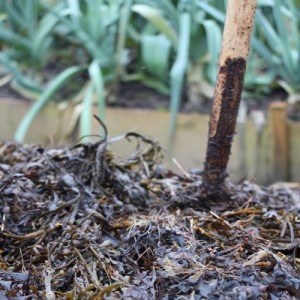
Seaweed can be applied in many ways. Used as a mulch it can be applied on its own or as part of a varied mulch mixed in with other organic matter from your home and garden.
Liquid Seaweed Fertilizer
In addition it can be used in liquid form. Left to ferment in fresh water for a few months the
concentrated broth is packed with many nutients and trace elements. These include nitrogen, potassium, magnesium, zinc, iron and alginic acid.


Combined, all these help plants to flourish. Seaweed contains phosphorous, which helps plants develop healthy and strong root systems. Alginic acid is a soil conditioner and aids with retaining moisture. Very beneficial when soil is located on dry ground or in sloping areas. The run off from the rain can often wash away other fertilizers and seeds.
A latent period exists when undecomposed, mulched or dry seaweed is added to the soil. Using nitrogen from the soil, the bacteria breaks down the organic matter. A temporary nitrogen deficiency in the soil occurs while this takes place. However, after the latent period, there is a considerable increase in nitrogen released by the composted seaweed. This more than compensates for this temporary deficiency.
With liquid seaweed fertilizer, the breakdown of the organic matter has already taken place. Therefore the plant reaps from those beneficial nutrients and trace elements immediately.
In certain soil types many useful elements are not available to specific plants as they cannot be absorbed. An example of this is in fruit trees that can suffer from an iron deficiency known as chlorosis in limy soils.
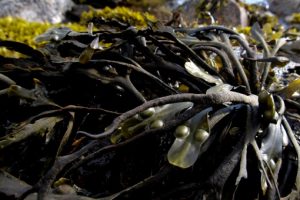
The starches, sugars and carbohydrates in seaweed and seaweed products combine naturally with the iron, cobalt, copper, manganese, zinc and other trace elements also found in seaweed. This combination provides the vital trace elements to the plants so they can be absorbed regardless of the soil they are in.
Furthermore, plants treated with seaweed products have been known to develop a resistance to pests and diseases. Not only to insects such as red spider mite and aphides, but also to scab, mildew and fungi.
As you can see, seaweed has many benefits and is indeed a invaluable fertilizer that is both natural and sustainable.
Comments 1
Hi. I’m glad he found seaweedpackaging.com website, I really like it, the article is very useful
and I shared it! In order to survive the hard times ahead
we found 2 very good books, you can download them here:
https://bit.ly/2RlAHdb and here: https://bit.ly/3e3Bg59
Great success with this site!