
“We can–and must–replace non-recyclable materials on the market with biodegradable alternatives”

A transformation is taking place in our world today that is changing the way we view our packaging and how it is affecting our planet.

Not long-ago plastic was a useful but inane commodity that passed through our lives effortlessly. Overused on a massive scale and discarded in a similar vein. What began as a concern then rapidly materialised into a huge problem.

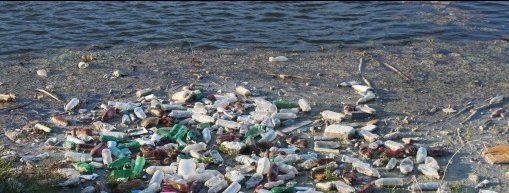
Estimates report that a massive 8 million tons of plastic waste ends up in our oceans each year. By 2050 our marine environment will contain more plastic than fish unless something is done dramatically to reduce this. It can take up to 1000 years for plastic to decompose, gradually breaking down into microscopic pieces.

So small that traces of plastic have been found in organisms as tiny as zooplankton which in turn finds its way into a food chain that encompasses vast amounts of species including us!

Plastic Bottles Waste

This is indeed shocking reading and should concern anyone who comprehends the mess we are currently in and the implications of what will happen if we do nothing.

No-one stands to gain from taking no action.

Ultimately, everyone on this planet will be affected, regardless of whether you eat seafood or not and for generations to come.

The severity of the situation has fortunately prompted a response from a number of individuals and organizations. The Ellen MacArthur Foundation is an example of this when they launched their New Plastics Economy initiative in 2016.

Plastic Economy

Because of this initiative, MARS, M&S, PepsiCo, The Coca-Cola Company, Unilever, and Werner & Mertz have pledged to use 100% reusable, recyclable or compostable packaging by 2025 at the latest.

This has also led to an increase in mainstream media coverage like Sky’s Ocean Rescue Campaign resulting in a lot more public awareness.

Sky Ocean Rescue

Raising public awareness appears to be the key. It is only with the support and pressure from public voters that a shift in policies determined by politicians and business leaders will take place. Normal people make a massive difference, more so than we realise. Not only with shaping these policies but also with the little changes we can make in our day to day lives.

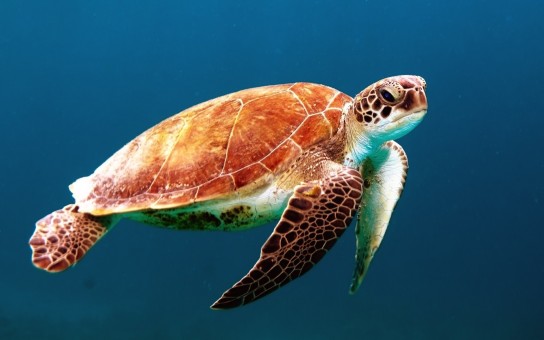
A levy of 5p on plastic bags in the UK in 2015 was met with a degree of scepticism due to the cost and inconvenience it created. It now seems to have brought with it a new awareness of how wasteful we were with this simple commodity. One that can take anywhere between 20 to 1000 years to decompose and kills large numbers of wildlife each year.  In a marine environment, plastic bags can be mistaken for jellyfish by wildlife such as birds, whales, seals and turtles who ingest the bags and then die from intestinal blockages.

Turtle

No one is expecting plastic to disappear overnight. I don’t think we could realistically cope without plastic altogether immediately, but there are some alternatives that could start to bridge that gap. Small scale now but the one fundamental concept held by the winners of a recent contest hosted by the Ellen MacArthur Foundation was “We can–and must–replace non-recyclable materials on the market with biodegradable alternatives”.

Biodegradable products are available now, made from a variety of different materials such as corn starch, potato starch, wood, cardboard and seaweed.

Certain concerns have been raised regards using some materials on land with large investments being required in space, fertilisers and chemicals. Then there is the possibility of competition between either growing crops for food or plastic. This could have a negative effect on food production and prices.

Research and development is still on-going with feasibility studies being carried out using these materials and others.

This is an industry that needs to succeed if we want to sustainably manage this threat to our environment and although it's early days, the signs are encouraging.


Plastic dumped each year
8
Million tons
Particles of microplastic
51
Trillion
Time plastic can take to decompose
500
Years
Amount of Plastic Recycled
9
Percent

Early Innovators of Seaweed Packaging

Early Innovators of Seaweed Packaging


Ooho

Edible water bottle

Ooho, the edible water bottle is an ingenious product.
It is a flexible membrane made from a seaweed extract.
Edible, biodegradable, natural and cheap to make.

It utilises spherification, a culinary process made famous by executive chef Ferran Adrià and the creative team at elBulli. 

Learn More
(opens in a new tab)

Evoware


Seaweed Packaging

Evoware have developed a number of biodegradable edible products made from seaweed.
Sachets for dry food products, for example cereal, coffee, salt and pepper.
Sachets for liquid and semisolid food products such as sauces and oils.
Wraps for foods like burgers, sandwiches and rice.
In addition there is packaging available for non food content such as for toiletries, toothpick sachets or straw sachets.

Learn More
(opens in a new tab)

AMAM


Seaweed Packaging

A group of Japanese designers collectively known as Amam have developed a product called Agar Plasticity.

The agar comes from two kinds of red algae.

They extract the agar by boiling the red seaweed then use a number of processes to create various packaging products.

Learn More
(opens in a new tab)

Loliware


Seaweed Straws and Cups

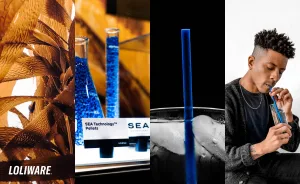
LOLIWARE Inc. is an award-winning materials tech company focused on replacing single-use plastics with seaweed-derived technologies Designed to Disappear™. Since its inception in 2015, LOLIWARE is rewriting the story of destructive packaging with products that last for hours, not forever. By harnessing the power of farmed seaweed to replace plastic at scale, LOLIWARE is tapping into its potential to regenerate our ocean and decarbonize our planet.

With their SEA Technology™ pellets, LOLIWARE can produce plastic-free, ocean-safe, home-compostable products at scale by making use of the plastic industry’s own machinery.

Learn More
(opens in a new tab)


Share this Page