Share this Post

Cultivating seaweed is not a new concept. It has been around for centuries, however only 10 years ago there was only 1 recorded seaweed farm in the whole of the UK.
That number is now into double figures and growing, not just in the UK but in other countries too.

Amazon has recently pledged £1.5 million from its £100 Global Right Now Climate Fund to a project led by a non-profit organisation called North Sea Farmers.
The group includes scientific researchers and partners from the seaweed industry.
They plan to utilise the free spaces between wind turbines to grow and then harvest seaweed.
If successful, the farm could provide the blueprint for commercial seaweed farms around the world.
Seaweed Farming Benefits
The benefits of seaweed are huge. It can be used as a food source for humans and animals. It’s a fantastic fertiliser that not only feeds and protects plants but improves the soil they grow in.
Face masks and various cosmetic products also utilise seaweed, as well as the medical profession.
Seaweed farming is globally worth in excess of £15 billion and could also reduce millions of tons of CO2 each year.
In Europe alone, 85000 jobs could be created in the industry through seaweed farming, production and sales.
The industry will no doubt have to overcome many challenges along the way, but the commercial viability is very lucrative.
Algapelago
In the UK, a firm called Algapelago are cultivating Kelp a few miles off the coast of North Devon.
Weighted buoys are used to define the location of these seaweed forests.
Unfortunately, due to adverse weather conditions and strong tidal currents the buoys can move making it difficult to keep track of the kelp farm boundaries. They can even be lost if they drift large distances.
Trackpac
In order to try and resolve this issue they have formed a partnership with an asset tracking company called Trackpac.
Trackpac have deployed Digital Matter Oyster 3’s.
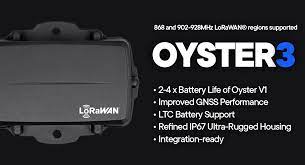
These are rugged battery powered Lorawan GPS tracking devices. These devices are attached to the buoys enabling them to be tracked by utilising the decentralised Helium network.

Helium is one of the worlds first peer to peer wireless networks
It offers an affordable, reliable, long-range solution.
Working together, this solution provides an efficient way to manage the seaweed farms, improve productivity in the long term and ultimately help the business to grow.