Share this Post

Imagine a plastic that was completely biosynthetic and biodegradable, had zero toxic waste and could be recycled into organic waste.
Not only that, it could be created by using a sustainable and eco friendly resource.
Polyhydroxyalkanoates or PHAs are naturally produced by nature.
They are polyesters that are derived from bacterial fermentation when nutrient supplies are imbalanced.
PHA can produce either thermoplastic or elastomeric materials with extremely different properties, with melting points ranging from 40 to 180°C.
Only plastics that degrade within a relatively short period of time (weeks to months, usually) are considered biodegradable.
Biodegradable

PHA plastic falls into the biodegradable category. They will decompose whether they are exposed to soil, compost, or marine sediment.
This makes them especially useful for applications like single use packaging.
In addition PHA can create biodegradable plastics, fibers, biocompatible implants, controlled drug-delivery devices and biofuels.
At present, the major substrates for commercial PHA production are still food-based glucose and vegetable oils.
The waste streams from the sugar fabrication (bagasse) and the generation of bioethanol (fusel alcohols) are used for running the PHA production and making it economically competitive.
However, the availability of cheap carbon sources hinders the production of PHA on a large scale.
Microalgal Biomass
A new Tel Aviv University study describes a process to utilise macroalgal biomass as a carbon source.
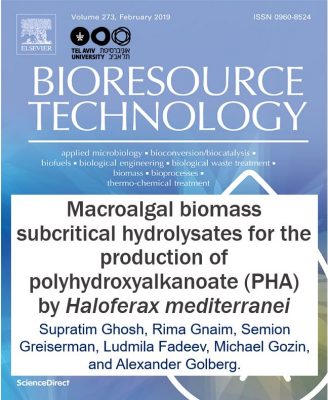
Particular attention focused on a halophile called Haloferax mediterranei as it can naturally produce PHA in high salinity environments.
These bioplastic polymers don't require land or fresh water and require very low nutrient supplementation.
To determine the carbohydrate compositions of the macroalgal, studies were carried out on 7 different species of seaweed.
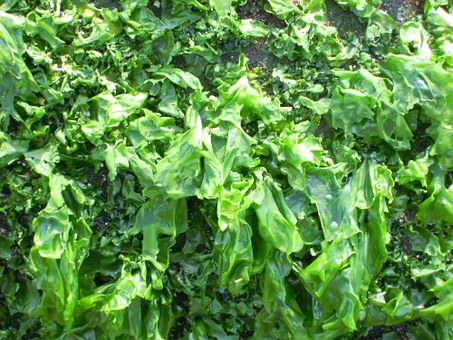
The seaweed species, Ulva lactuca (sea lettuce), has been identified as a promising feedstock for PHA production.
In the future, macroalgal biomass could be used as a cheap and sustainable substrate for the production of PHA.
Comments 9
Good dаy! I simply would like to give you a һugе thumbs up for
your exceⅼlent information you have here on this post. I am returning
to your site for mοre soon.
Have you ever considered about adding a little bit more than just your articles?
I mean, what you say is fundamental and all.
However think about if you added some great pictures or video clips to give
your posts more, “pop”! Your content is excellent but with pics and clips, this blog could definitely be one
of the most beneficial in its niche. Superb blog!
I am regular visitor, how are you everybody?
This post posted at this web page is in fact fastidious.
Has any company started to produce biodegradable plastics from Ulva Lactuca ?
Wһy users stіll use to read news papers when in this technologicаl
globe everything is existing on net?
Wow that was odd. I just wrote an incredibly long comment but after I
clicked submit my comment didn’t show up. Grrrr…
well I’m not writing all that over again. Anyhow,
just wanted to say superb blog!
Hi, can you use this for any kind of single use sachette material? Runs through form, fill, seal equipment?
Your works with seaweed solutions are just awesome! I am seriously contemplating to also go in this track and looking for portential collaboration and partnership. I came from a family of farmers and have existing rubber plantations. I realized that with the current call for climate action, to explore how seaweeds will be the best replacement for rubber products, like plastic in biodegradable and edible form.
Hope to hear from you. Let’s talk, and take action together in all areas we can cover.
Author
Hi,
I hope the site has given you some useful information
I’d be interested in writing about your plans or ideas for the future regards using seaweed as a replacement for rubber
Kind Regards
Vince