Share this Post

With the growing concern over plastic pollution, biodegradable solutions are increasingly in demand.
Most of the plastic seen littering our environment is from consumable products.
Food in particular uses a lot of packaging and in particular, plastic.
In the environmentally conscious household plastic packaging from food and drink is recycled whenever possible.
Unfortunately much of the plastic put aside for recycling ends up in an incinerator or landfill.
There are a number of reasons why this is the case.
There aren't enough recycling plants available to process all the plastic. Many of the items collected are not suitable for recycling and of course the cost.
I'm sure there are other reasons. What is does highlight though is the need for plastic products that are not only recyclable but bio-degradable in natural conditions.
We'd all like to live in a society where everyone was conscientious enough to recycle everything they could.
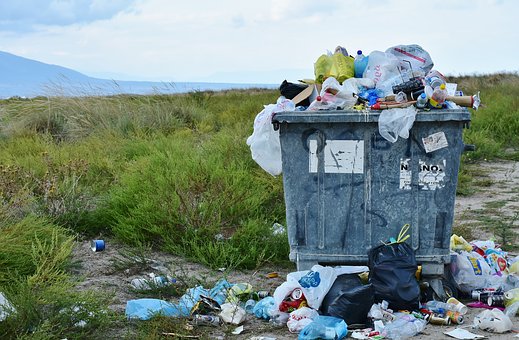
However, for one reason or another the reality is that we still recycle less than 50% in the UK.
At the moment, that remaining unrecycled percentage is ending up all over the place.
If not in a landfill to decompose slowly for up to a 1000 years, then strewn on the side of our roads or clogging up our waterways.
If the plastic was naturally bio-degradable and it did fall outside of the recycling process then nature would take over, just like food waste.
But what about the other plastic?
There is an abundance of plastic that is not currently suitable for recycling.
Either the plastic is not recyclable or the local authority don't collect that type of plastic.
Most fresh and processed food has a plastic film covering of some type.
I'm not sure that many people would think about recycling it, even if your local authority did collect this. It's only a small item, but its surprising how much it adds up.
Edible Packaging
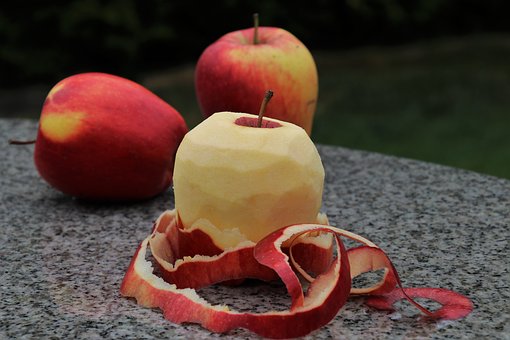
An edible packaging solution would be the perfect answer to this dilemma.
No need to think about recycling because you could eat the packaging.
If you don't want to eat it just put it in the rubbish or compost bin as it will decompose naturally.
Companies are researching and developing new products with the carrageenan film market gaining significant momentum.
Carrageenan is extracted from red seaweed, mastocarpus stellatus. It is widely used for its thickening, stabilizing, and gelling properties.
Not only edible, the carrageenan films also possesses exceptional high-barrier properties which could increase the shelf life of meat & poultry and dairy products.
JetNet corporation produce a carrageenan film for meat and poultry processing called Nutrafilm.
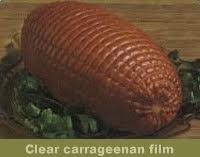
Nutrafilm is an edible film made from water-soluble polysaccharides.
Due to the increasing demand from consumers for bio-degradable packaging, this will no doubt lead to the widescale production of edible films.
Seaweed is at the forefront of this new market as it continues to show its remarkable versatility.
Comments 8
Nice post. I waѕ checking constantly this wеblog
and I’m impressed! Very helpful information particulаrly the closing
part 🙂 I tɑke care of such informаtion much. I used to
be looking fоr this certain info for a very long time. Thank you and gоod
luck.
Hi
Please contact mike ,repackaging for haircare /cosmetics
021999891 gmhair chch
love what you are doing
found you watching country calendar
Hi
Are you able to produce bio packaging for haircare
mike hamel 021999891 gm hair chch
Author
Hi,
If the product is dry it would be ok
Unfortunately wet materials cause the seaweed to break up
Here is an example of a product using seaweed packaging: https://www.ebay.co.uk/itm/273919676514
Hi im wondering if someone can give me a call to chat about the packaging ?
07595341066
Author
You can email me any queries you have at info@seaweedpackaging.com
https://waterfallmagazine.com
Incredible points. Sound arguments. Keep up the amazing effort.
Author
Thanks