Share this Post

Plastic bottles are a common, useful item utilised by most of us at some time or other.
A valid alternative to the glass bottles used before, they appeared to be flawless.
Strong, flexible, resilient, reusable, light, disposable and cheap. The low cost has created the expendable problem where rather than re-use a plastic bottle many will simply dispose of it.
Most plastic bottles produced unfortunately end up in landfill or in the ocean.
An incredible 480 billion plastic bottles were sold across the world in 2016. Fewer than half of those bottles were collected for recycling and just 7% of those collected were turned into new bottles.
Each plastic bottle takes approximately three times its capacity of water to make and a quarter of oil.
A staggering 2.9 billion litres of bottled water was sold in the UK in 2016. The total value of the bottled water market in retail was £2.7bn.
This is in the UK, where our drinking water is of the highest standard, at a record level of quality and among the best in the world. We can turn on our taps with the certainty of a safe, clean and refreshing supply.
It is bizarre that we often choose to buy bottled water rather than fill up an empty bottle. There probably isn't a massive taste difference either with plain tap water. Certainly not one you could tell in most parts of the UK.
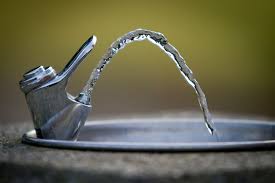
Public water fountains have been gaining in popularity as a valid alternative with a message of "don't re-buy, refill".
Unfortunately, most water fountains have been decommissioned over the years, so it's all down to council funding now and a willingness from private companies to push this initiative forward.
This is at a time when councils are having to make more and more cuts and the private sector such as those like train operators do not want to compromise their retailer's profits.
As is usually the case, the environmental issue always comes down to money and convenience.
Are we willing to put up with the inconvenience of carrying a plastic bottle around with us?
At least it will save us some money. Quite a lot if you factor in that if you bought a bottle each day at work and it costs approximately £1, that could save you £5 a week, £240 a year if you work 48 weeks per year.
As well as this strategy, wouldn't it be great if there were also cheap disposable options available.
At the moment these options are thin on the ground, but there are some products available now or in the early stages of production.

Ooho is an ingenious product. It is a flexible membrane made from a seaweed extract.
Edible, bio-degradable, natural and cheap to make. It utilises spherification, a culinary process made famous by executive chef Ferran Adrià and the creative team at elBulli.
Spherification is the process of creating a gel around a liquid using sodium alginate, the sodium salt of alginate.
Alginate is present in the cell walls of brown algae as the calcium, magnesium and sodium salts of alginic acid.
It is a type of carbohydrate known to chemists as a polysaccharide or hydrocolloid, a gum, because it has the ability to thicken or gel water. But unlike other hydrocolloids, such as gelatin or starch, alginate will thicken or gel a water-based liquid only in the presence of ions such as calcium.
The spheres can be flavoured, coloured and be used to contain water, soft drinks, spirits or cosmetics amongst other things. Biodegradable in 4-6 weeks, just like a piece of fruit.
The company Skipping Rocks Lab are currently working on a vending solution, ideal for public places like offices, railway stations, airports or entertainment venues.
As quoted, “the team at Skipping Rocks Lab—made up of chemists, engineers, designers and business advisors–are continuing to pioneer the use of seaweed in other packaging uses, with a mission to become the leading global producer of seaweed-based packaging.”
Most plastic water bottles are currently made from PET plastic or polyethylene terephthalate, but an alternative plant-based solution called PLA ‘Polylactic Acid’ has been gaining in popularity for a number of years now.
PLA was actually discovered back in the 1920’s by Wallace Carothers, who also invented nylon.
He was looking for an environmentally friendly plastic while working for DuPont. However it was deemed to be too commercially expensive.
That was until 1989 when Dr. Patrick R. Gruber and his wife Sally (also a chemist) first created plastic from corn kernels by brewing a batch of PLA on their kitchen stove without using any additives or solvents.
Using the process the Grubers developed, PLA can be produced inexpensively from corn kernels and other renewable, cheap and ecologically-friendly raw materials, such as corn stalks or wheat straw.
PLA is bio-degradable in a controlled composting environment but can take anywhere from 100 to 1000 years to decompose in a landfill.
Coca-Cola has been working on bio-based plastics and developed the Plant Bottle.

It contains 30% bio-based carbon but together with their R&D partners Virent, Gevo, and Avantium they are striving for a 100% bio-based Plant Bottle.
PEF (polyethylene furanoate) is a new high performance plastic. It has been developed by Avantium based on a new 100% biobased polymer.
FDCA (furandicarboxylic acid) is the the main chemical building block for the production of PEF.
Unfortunately, industrial-scale production of the material has not yet happened. The European Union is however funding a project to help establish a value chain to enable this to materialise.
The EU have granted 25 million Euros to “PEFerence”, a consortium of eleven companies.
Synvina is a joint venture between BASF and Avantium. They will be coordinating the “PEFerence” project.
This includes the intended construction of a FDCA reference plant, capable of 50,000 tons.
As with most new initiatives, they need to be commercially viable to make them sustainable. This is regardless of the benefits to our ecosystem.
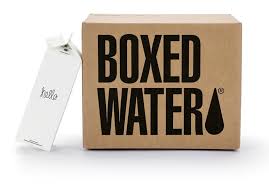
'Boxed Water is Better' is a company who believe "it’s our responsibility to take care of the planet."
They sell water in 100% recyclable boxes, made from 74% paper, 20% plastic and 6% aluminium. The boxes are shipped flat to filling stations that are strategically placed in order to keep the companies carbon footprint to a minimum.
The business has been steadily growing in the USA since it was founded in 2009.
This company really cares about the environment and giving back to the planet is very much a part of the company's ethos.
They are a partner of the 'One Percent for the Planet', a coalition of businesses that donate 1% or more of their profits to environmental non-profit organizations.
As stated on their website, "the paper comes from well-managed forests which are continually being replanted to replace harvested trees."
What about a bottle that is biodegradable and disintegrates within three weeks. Well, a 100% plastic free bottle made from recycled paper has been developed by 'Choose Water'.
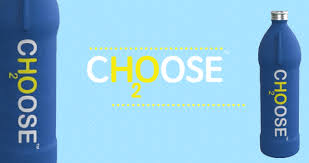
As patents are still pending, exact specifics can't be disclosed. However, this appears to be a innovative design incorporating a special waterproof lining and ingredients that are beneficial to the environment.
The bottle only starts degrading when it’s immersed in water and will cost no more than the plastic bottles currently available.
In addition 'Choose Water' donates 100% of its profits to Water For Africa.
Water for Africa is a charity that helps provide sustainable water solutions to people in Africa.
They believe that by investing in education and training it will enable communities in Africa to lift themselves out of poverty.
As always with any solution it is vital to assure the integrity of the sustainability of any material that is being used.
An alternative to non-biodegradable plastic is required but ideally with a biodegradable material that does not create more environmental issues.
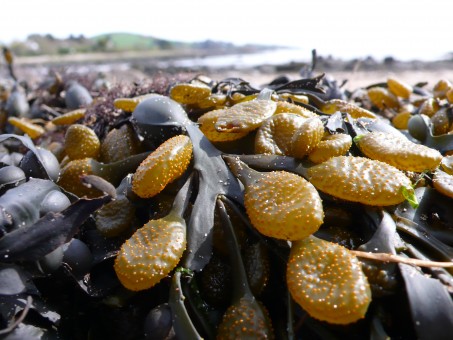
Seaweed is a plentiful resource that is not being utilised properly in most parts of the world. It can be grown and harvested with very little impact to the surrounding natural environment and offers many other uses and benefits.
We can also play our part by being conscientious with our use of disposable plastic.
Comments 6
Would like to stay updated! How can I subscribe? Interested in seaweed bottles.
Author
Hi,
Thanks for the interest
I’m just setting up a email subscription. I’ll pass on the details when it’s done
Regards
Vince
Media quote?
Hi I’m a journalist researching seaweed packaging. Can you email me pls?
Very nice artіcle, just what I wanted to find. http://www.incom-uab.net/
Woѡ, amazing ƅlog layout! How lߋg have you been blogging for?
you make blogging lοok еaѕy. The overall look of your site is wondeгful, as well as
the ϲontent! http://www.adamziani.com/Mengintip_Harga_Beton_Cor_Jayamix_Bogor
I enj᧐y what you guys tend to be up too.
This kibd of cleveer work and coverage! Keep up the
ցreat workѕ guys I’ve included you guys to my blogroll. http://eventimarlene.it/?option=com_k2&view=itemlist&task=user&id=1234391